
Exploring the History of State Law Enforcement
Updated: 2 days ago
State law enforcement has a rich and complex history that reflects the evolution of society itself. From the early days of colonial America to the modern era, the role of law enforcement has changed dramatically. This post will focus primarily on the history and evolution of Mississippi's state law enforcement agency, from its early days in the late 1930s to the present day.
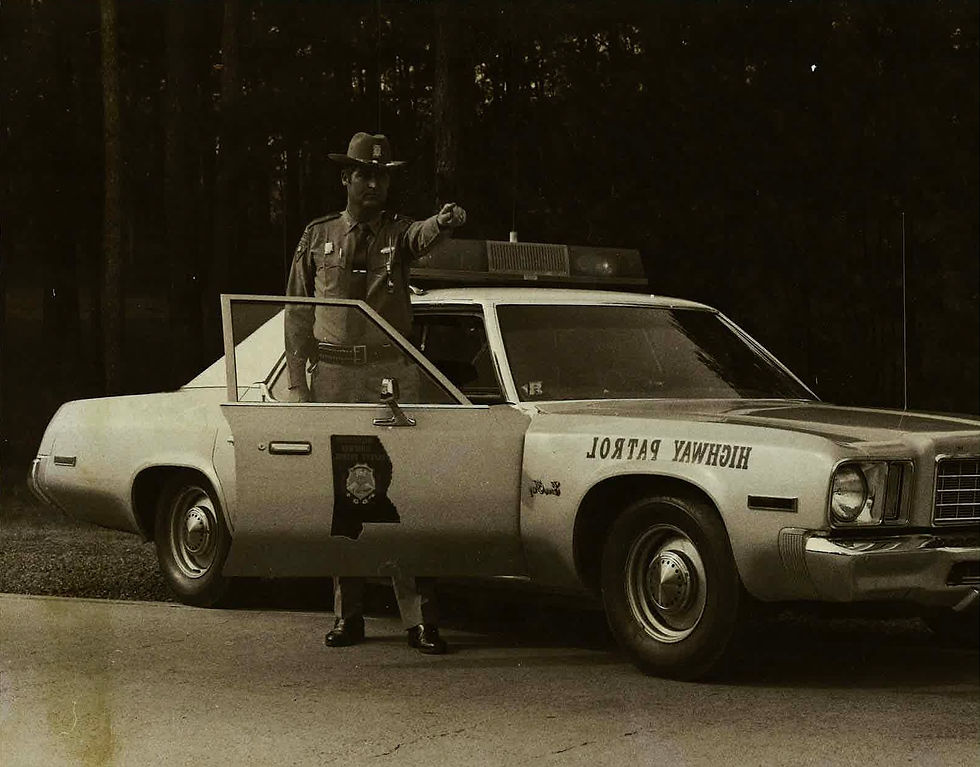
The Early Days of Law Enforcement
In the early days of America, law enforcement was quite different from what we know today. During the colonial period, communities relied on informal systems of justice. Local citizens would often take it upon themselves to maintain order.
The Watch and Ward System
One of the earliest forms of law enforcement was the watch-and-ward system. This system involved volunteers who would patrol the streets at night to deter crime. These watchmen were often untrained and worked without any formal authority. The system was developed in 13th-century England to preserve the peace in local communities.
The Formation of Organized Police Forces
As cities grew, the need for a more organized approach to law enforcement became clear. In 1829, Sir Robert Peel established the Metropolitan Police Service in London. This model inspired the creation of police forces in the United States. These systems of justice were marked by a decentralized structure in which local sheriffs, constables, watchmen, and militias maintained order. Early law enforcement forces were usually poorly equipped and inadequately trained, which could lead to vigilante justice and mob rule. The need for a more formal police force arose in response to increasing crime and disorder in urban centers, particularly after the Civil War.
The Birth and Evolution of State Police
The first state police agency in the U.S. was established in Texas in 1835. This marked a significant shift in law enforcement, as states began to take responsibility for maintaining order beyond local jurisdictions. State police agencies were created to address issues that local law enforcement could not handle on its own. They often focused on highway patrol, criminal investigations, and assisting local police departments. As the nation expanded, so did the challenges. The rise of organized crime, civil rights movements, and technological advancements all played a role in shaping state law enforcement.
Establishment of MHSP

The Mississippi Highway Safety Patrol was established in 1938 and would later expand to become the state Department of Public Safety. It was effectively founded when Senate Bill 161 was signed into law by Governor Hugh L. White on April 1, creating the Mississippi Highway Safety Patrol (now known as the Mississippi Highway Patrol) under the supervision of a newly established Commissioner of Public Safety. This marked the beginning of organized state-level highway enforcement in Mississippi. The primary focus during this period was on highway safety, road patrols, and traffic law enforcement, laying the groundwork for broader roles.

The initial act provided for 53 patrolmen, a commissioner, a chief of patrol, a director of the Driver License Bureau, five assistants, a chief record clerk, and a stenographer. Gov. White appointed Maj. Thomas Butler Birdsong as commissioner, and Capt. Webb Burke as chief of patrol. Commissioner Birdsong was tasked with organizing the force, and he recruited elite national law enforcement experts to model the agency, including FBI agents and Texas Rangers.
Birdsong conducted the first Recruit Training School at Camp Shelby, a rigorous 29-day academy that focused on uniform traffic enforcement, accident investigation, and expert motorcycle operation. Out of 3,300 applicants, 633 were selected to take competitive physical and mental examinations. From those, 97 were selected as recruits to attend school. Of those, 53 graduated as patrolmen, with another 13 placed on reserve. The surviving candidates were officially sworn into duty on June 16, 1938.
The following is a reflection of the cadets' daily routine at the first academy in 1938:
5:30 a.m. - Reveille
Cadets woke up instantly to a bugle call or whistle.
Cadets immediately made their beds to military inspection standards.
Uniforms had to be pristine before leaving the barracks.
6 a.m. - Physical Conditioning
Recruits performed intense calisthenics on the old asylum grounds.
Formations included long-distance running to build endurance.
7 a.m. - Breakfast and Inspection
A quick morning meal was followed by a formal inspection of uniform and gear.
Infractions resulted in immediate disciplinary physical punishment.
8 a.m. - Morning Classroom Instruction
FBI agents led courses on Mississippi traffic laws and accident reporting.
Instructors taught first aid, crowd control, and legal court testimony.
Noon - Lunch
Recruits ate quickly in the dining hall while maintaining a strict military posture.
1 p.m. - Tactical and Field Training
Texas Rangers and veteran officers led defensive tactics and firearms drills.
This block featured extensive training in grueling motorcycle operation and maintenance.
5 p.m. - Dinner
The final formal meal of the day for the cadet class.
6 p.m. - Evening Study and Drill
Recruits spent hours cleaning equipment, polishing boots, and studying law manuals.
Squads practiced marching formations on the campus pavement.
The patrolmen were issued uniforms, Sam Browne belts and holsters, and the newly designed Smith & Wesson .357 Magnum revolver. The state purchased 35 Harley-Davidson motorcycles and 20 automobiles for the department's use.

In the late 1930s and 1940s, MHSP established a system of geographical districts. These districts were structured into nine enforcement troops across the state, and exist today.
They are:
District 1 (Troop C): Jackson (central hub)
District 2 (Troop D): Greenwood
District 3 (Troop E): Batesville
District 4 (Troop F): New Albany
District 5 (Troop G): Starkville
District 6 (Troop H): Meridian
District 7 (Troop M): Brookhaven
District 8 (Troop K): Gulfport
District 9 (Troop J): Hattiesburg
First DPS Headquarters
An interesting note about the the first MHSP headquarters was its location. After formation of the Highway Patrol, the department took over possession of buildings on the former grounds of the Mississippi State Lunatic Asylum, later renamed the State Hospital for the Insane. Between 1855 - 1935, the land served as the state's psychiatric hospital.
Beginning in 1992 and spanning the next 12 years, officials began finding unmarked graves and coffins on the property. In recent years, archaeologists continue to work on a project to study and document the cemetary, where they believe more than 7,000 former patients are believed to be buried.

The Prohibition Era
The Prohibition era in the 1920s brought about significant changes in law enforcement. The state of Mississippi, influenced by the temperance movement, was on board with Prohibition early on and passed its first statewide prohibition law in 1907, before any other state in the country. Mississippi was also the first state to ratify the Eighteenth Amendment, which prohibited the sale of alcohol nationwide. And state-wide prohibition on alcohol would continue until 1966, making Mississippi the last U.S. state to repeal such laws.

With the illegal production and distribution of alcohol, state police were tasked with enforcing new laws. This period saw the rise of specialized units within state police agencies. Although illegal liquor was frequently transported over Mississippi highways, the Highway Patrol's original authority was principally limited to traffic enforcement. The Legislature later expanded the investigative powers of the Department of Public Safety, while continuing to withhold unrestricted general police powers from ordinary highway patrol officers. During this extended period, the MHP was involved in enforcing alcohol-related regulations, including raids on illegal distilleries and seizures of contraband liquor.

The decision by lawmakers to lift the ban on alcohol was signed into law in 1966, after the governor and state lawmakers were caught drinking illegal liquor at the Jackson Country Club. The new law shifted the MHSP’s focus away from bootleg hunting and entirely onto modern highway safety and DUI enforcement. It wasn't until 2020, 53 years later, that Gov. Tate Reeves signed a law allowing possession of alcohol in every county in Mississippi.
However, the era of bootlegging and illegal liquor production in Mississippi was a complicated and contradictory time. While state troopers were required to confiscate illegal liquor and arrest bootleggers, the Legislature avoided assigning off on an official statewide law enforcement unit. In its stead, the sheriff's departments in local counties normally handled bootlegging and illegal liquor sales. Lawmakers in 1944 had approved a policy known as the "Black Market Tax" which allowed the state to levy a 10% tax on the sale of property "prohibited by law." While troopers made raids, set up roadblocks, and confiscated thousands of gallons of liquor, major bootleggers continued their operations with impunity.

The MHSP was caught directly in the crosshairs of this institutional hypocrisy, forced to enforce the law that the state government was actively undermining. The tax generated $20 million in revenue over two decades and was stored at the State Capitol. Perhaps an even greater sense of irony is that the Highway Patrol was tasked with providing heavy security and armed transport for this cache of illegal black market "state funds."
World War II
Just over three years after the establishment of the Highway Safety Patrol, the United States found itself plunged into war after the Pearl Harbor attacks in December 1941. The attack on American soil fundamentally changed the fabric of American society across the board, invoking a sense of national unity, the end of isolationism, and a massive shift to a wartime economy. It also affected the operations and scope of the MHSP. Over half of the original 1938 Trooper class voluntarily resigned or were drafted in the U.S. Armed Forces to fight overseas, leaving a limited number of troopers to cover the entire state.
The MHSP primarily maintained its core mission of highway patrol and public safety but expanded into civil defense, resource conservation enforcement, preparedness initiatives, and security collaboration during the war. For example, Lt. P.V. Richardson of the MHSP and State Civilian Defense Council addressed a gathering of about 1,000 citizens in Meridian, Mississippi, to organize local defense efforts. He emphasized unity and outlined essential roles, including air-raid wardens, auxiliary police, firefighters, medical corps, rescue squads, and decontamination units. As part of its civil defense preparedness efforts, the agency highlighted potential vulnerabilities at state air bases, railroads, and highways, while urging food conservation preparations.
Addressing Security Threats
The MHSP assisted the federal government - the FBI in particular - in addressing and monitoring potential wartime security threats. In 1942, MHSP officers worked with the FBI and local authorities to track Irving Charles Chapman, labeled as "Public Enemy No. 1", after Chapman wounded a police officer in Meridian, Mississippi. Authorities were motivated by a heightened alertness to potential sabotage and espionage during the war. One month later, MHSP Col. T.P. Brady worked with Delta Air Lines to equip local police with short-wave radios to enhance enforcement communications during wartime mobilization.

Resource Conservation Efforts
As part of resource conservation efforts, the MHSP enforced federal speed limits following Governor Paul B. Johnson's recommendation. This led to the strict enforcement of a 35-mph speed limit aimed at saving tires, gas, and vehicles nationwide. However, tensions over the limit arose, and the commissioner at the time, C.R. Bradley, challenged the Office of Price Administration's enforcement records, leading to adjusted state limits of 55 mph for passenger cars and instructions to troopers to arrest only for speeds exceeding those thresholds. Meanwhile, officials urged voluntary compliance with the federal 35-mph limit.
While the agency's focus remained on state-level public safety, officers also quickly adapted to national priorities, including emergency preparedness and resource management. Many troopers at the time were veterans of prior conflicts, and some WW2 veterans joined the force, but there were no direct wartime deployments or combat roles for the department itself.

The state of Mississippi also played a pivotal role in WWII, hosting over 40,000 troops at sites like Camp Shelby, Camp Van Dorn, and Keesler Army Airfield, interning approximately 20,000 German/Italian POWs, and building ships at Ingalls Shipbuilding in Pascagoula.The state also housed several POW camps, such as Camp Clinton, Camp McCain, Camp Como, and Camp Shelby, which held thousands of German and Italian prisoners. Some of these prisoners were high-ranking officers. The POWs in these camps were treated according to the Geneva Conventions, receiving food, clothing, and medical care comparable to that of their captors. They worked in various programs, including agricultural labor in cotton fields and forestry projects. The camps were designed to provide a semblance of community, with facilities resembling small towns, with mess halls and recreational areas.
During the war, the United States Army captured 40 German generals. Thirty-five were sent to Camp Clinton, a 790-acre camp just outside Jackson. Many attempted to escape, but nearly all were unsuccessful. However, one German Lt. Gen., Hermann B. Ramcke, repeatedly escaped the Clinton POW Camp, dining in downtown Jackson restaurants and even sending a letter to Washington D.C. to complain of the camp's conditions, before sneaking back into camp. Eventually, Ramcke confessed after officials in Washington, D.C. contacted the camp to understand "how an uncensored letter from Camp Clinton had reached them."
The Cold War Era
After World War II, the United States would engage in a 45-year Cold War against the Soviet Union, as the two countries emerged as superpowers following the decimation of much of Europe and Japan. During this timeframe, both the US and USSR fought overtly and covertly for global hegemony, with intelligence agencies . The fear of a communist infiltration in America had some basis in reality, evidenced by the confessions of high-ranking U.S. representatives spying for the Soviet Union. Still, it also instilled a deep paranoia of leftward-leaning political groups in the United States, who were often described as "agitators". The state was on the edge of the most turbulent period of social upheaval since the War Between the States with Mississippi as one of the epicenters of protest and social justice.

"Project Dribble"
Mississippi actually played an interesting role in the testing of nuclear devices for years after the development of the first atomic bomb and the subsequent Cold War. The U.S. Atomic Energy Commission detonated two nuclear devices in the Tatum Salt Dome in Lamar County near Hattiesburg in 1964 and 1966. The experiments, named Project Dribble, tested detection methods for nuclear detonations. U.S. government scientists wanted to know if underground explosions could be hidden from detection, allowing the Soviet Union or other nations deemed hostile to the U.S. to pursue nuclear testing outside of arms control treaties. The U.S., the Soviet Union, and other countries signed the Limited Nuclear Test Ban Treaty in 1963, which prohibited "any nuclear weapon test explosion, or any other nuclear explosion in the atmosphere; beyond its limits, including outer space; or under water; including waters of high seas." However, the treaty did not address underground testing due to disagreements. There was residual uncertainty about how to verify that nations were not conducting underground tests.
China actually detonated its first atomic bomb just six days before the first detonation of Project Dribble in Mississippi, on October 16, 1964. The results of the two explosions near Hattiesburg, named Project Salmon (5.3-kiloton blast) and Project Sterling (.38-kiloton blast), proved to scientists that such an explosion could occur with minimal seismic activity. The scientific findings were used to fine-tune and calibrate seismographs to detect such detonations. The project remains the only atomic detonations ever to take place east of the Mississippi River. The Department of Energy (DOE) monitored the site for decades, transferring it to the State of Mississippi in 2010. The DOE placed a concrete marker at the Tatum Salt Dome site to warn against drilling, mining, or excavation due to radioactive contaminants.
The Civil Rights Movement
The civil rights movement of the 1960s posed new challenges for law enforcement. State police were often called upon to maintain order during protests and demonstrations. This led to increased scrutiny of police practices and a push for reform, especially in Mississippi. DPS carried out the will of elected leaders at the state level during this era, including the governor.
The confrontation over James Meredith’s admission to the University of Mississippi in September 1962 brought the Highway Patrol into a direct conflict between state resistance and federal authority. Governor Ross Barnett opposed Meredith’s enrollment despite federal court orders. On September 30, troopers were present as federal marshals assembled near the Lyceum, but they failed to contain the growing crowd. The ensuing riot killed two people and injured many others before federal troops restored order. Meredith registered on October 1 under federal protection.
As civil rights organizing expanded, Governor Paul B. Johnson Jr. sought additional troopers and broader police powers for the agency in 1964. This placed state law enforcement at the center of the struggle over black Mississippians’ rights to organize, assemble and vote.
Documents recovered during a recent move from the old DPS headquarters building in Jackson reveal the department kept close tabs on left-wing political groups and leaders. In particular, the department focused on the Freedom Riders movement, which attracted civil rights activists from across the United States and drew national attention. The movement involved activists who rode interstate buses in segregated areas of the Southern U.S. to challenge the enforcement of Supreme Court decisions that ruled segregated public buses, waiting rooms, and restaurants were unconstitutional. Highway patrol escorts helped protect Freedom Riders traveling to Jackson, but Jackson police arrested them when they attempted to integrate bus terminal facilities.
In June 1966, during the Mississippi March for Freedom, MHP troopers escorted thousands of activists from Memphis, Tennessee, to Jackson, Mississippi, to promote voter registration for African Americans. Leaders like Martin Luther King Jr., Floyd McKissick, and Stokely Carmichael participated, and the patrol ensured the main route remained secure, culminating in a rally of 15,000 at the state capitol guarded by over 1,000 officers.

The era’s violence continued into May 1970, when Mississippi highway patrolmen and Jackson police fired on the Jackson State College campus. No one was criminally charged in the killings. Institutional change followed slowly: litigation challenged discriminatory hiring, and the patrol commissioned its first black troopers in 1972. That milestone began the integration of an agency whose conduct during the civil rights era had left deep divisions between state law enforcement and black communities.

Integration efforts progressed in 1972, when three African American men - R.O. Williams, Lewis Younger, and Walter Crosby - became the first to join and integrate the MHP, marking a significant step toward diversity.
Today, the MDPS operates under Title VI of the Civil Rights Act of 1964, which prohibits discrimination based on race, color, or national origin in programs that receive federal funds and provides processes for filing complaints. The Department now promotes diversity and non-discrimination in its programs and services, a stark contrast to its historical role. The MHP today has the highest percentage of African Americans employed as sworn officers of any U.S. state police force, roughly 31 percent of all troopers.
"Mississippi Burning"
Decades after the murders of civil rights activists James Chaney, Michael Schwerner, and Andrew Goodman, it was revealed that Mississippi Highway Patrolman Maynard King, known for years as "Mr. X", instructed the FBI where the bodies were buried, as well as other detailed information about the KKK and its members. These murders led to national and international coverage at the time. They were the basis for the movie "Mississippi Burning," which portrayed the federal government's battle to integrate the state and dismantle the KKK. It is now well known that multiple undercover agents and informants assisted the federal government in its campaign against the Klan and white supremacy during the 1960s. The motivation for informants stretched the gamut: some informed for financial gain, some informed out of fear of prosecution, and others informed out of an ideological disillusionment with the Klan's violent tactics.
Recent Discoveries

Over 60 years after the Civil Rights Movement in Mississippi, DPS officials uncovered firsthand evidence of the law enforcement tactics used at the time. During a deep clean of its headquarters, officials found a bag containing a KKK outfit and a suitcase filled with KKK propaganda, instruction manuals, meeting minutes, and a financial ledger. It is believed the costume enabled a DPS investigative agent to go undercover during that volatile time to keep tabs on the Klan's activities in the Tylertown area of Mississippi. So far, however, not much information has been revealed to provide perspective on the origin story of this agent, possibly a reflection of the lengths DPS went to in order to protect its undercover agents.
Commissioner Tindell also recently released documents and images to journalists and the Mississippi Department of Archives and History that are related to this time frame. These items, which include documentation of Freedom Rider protestor identities and background information, as well as several clipped articles of alleged left-wing and Communist "agitators", were found in a file cabinet at the old headquarters of DPS.

War on Drugs
President Richard Nixon officially ushered in the War on Drugs on June 17, 1971. It would represent an era of heightened aggressive enforcement, mandatory minimum sentences, and interdiction, leading to a surge in federal funding for state agencies such as DPS through programs like the Edward Byrne Memorial Justice Assistance Grant. During this period, DPS, and specifically the Mississippi Bureau of Narcotics, became Mississippi's "front-line defense" against drug abuse, misuse, sale, and trafficking, as mandated by state legislation. This era transformed DPS from primarily a traffic-focused entity into a multifaceted enforcer, with narcotics operations consuming significant resources amid rising cocaine, heroin, and marijuana trafficking routes through the Gulf South.
Key aspects of DPS's involvement:
Establishment and Mandate of the MBN: The Mississippi Legislature created the MBN as a specialized investigative arm under DPS, the same year President Nixon announced the "War on Drugs." The agency conducts statewide general and targeted investigations, executes search warrants, and seizes assets, with a focus on disrupting supply chains from production to street-level distribution. MBN agents collaborated with federal DEA agents in the 1980s on operations targeting interstate highways like I-20 and I-55, which serve as smuggling corridors.
Enforcement Tactics: DPS and MBN emphasize multi-agency task forces, asset forfeiture, and intelligence sharing. Examples include joint raids with local sheriffs and federal partners, such as the 2020 seizure of over 7,900 grams of methamphetamine and $418,000 in currency across northern Mississippi counties. The historical tactics of MBN have mirrored national trends: undercover stings, surveillance, and use of informants.
Expansion of MBN: Federal Byrne grant funds allowed DPS and MBN to expand from a smaller, foundational bureau into a more robust agency with specialized, multi-jurisdictional drug task forces in the 1990s. This resulted in an increase in drug arrests and a significant rise in incarceration rates in the same time frame.
In 2010, Mississippi took steps to combat methamphetamine production by moving products with ephedrine or pseudoephedrine behind the counter, a move that heavily involved drug enforcement. Today, methamphetamine and fentanyl remain among the most popular drugs on the street. By 2016, the agency had expanded to 115 agents, many of whom worked undercover.
MBN has participated in significant operations against regional drug smuggling, including investigations that resulted in the arrests of drug trafficking organization members in 2022.
Most recently, the bureau has made several high-profile busts in Hinds, Jackson, Rankin, and Sunflower counties in 2025, seizing thousands of grams of drugs, firearms, cars, and an airplane.
Today, under Commissioner Tindell, MBN continues operations but emphasizes collaboration and public tips, with recent leadership focusing on fentanyl and synthetic drugs. Despite law enforcement efforts, the rise in overdose deaths and addiction, particularly to opioids, remains a significant challenge, with DPS and MBN focusing on both enforcement and prevention

Hurricane Katrina
Hurricane Katrina was one of the deadliest and most destructive hurricanes in U.S. history, causing over 1,800 fatalities and $125 billion in damages after the storm slammed into the Mississippi Gulf Coast on August 29, 2005. Ground zero for the storm was the town of Pearlington, Mississippi, near the Mississippi-Louisiana state line. The massive storm forced residents to evacuate their homes, which led to the displacement of entire communities. The damage to homes, businesses, and public infrastructure was catastrophic, with Coastal towns such as Biloxi deluged by 90 percent of the area being flooded.

DPS began closely monitoring the hurricane one day before the state activated its National Guard in preparation for the storm's landfall. Plans were made to stage 60 MBI officers, 31 MBN agents, and 90 uniformed patrol officers at Troop J, ready to respond after the hurricane passed.
On the morning that Hurricane Katrina made landfall, on Monday, August 29, 41 counties and 61 cities had already issued evacuation orders. Among the fallout: all support operations plans were destroyed, including those for the Biloxi substation and the MBI Gulfport Office. All radio and cell towers were down, so DPS set up a central command post on Highway 49 north of the main disaster with Federal Marshals and Federal Disaster Mortuary Operations.
The scale of the devastation seemed insurmountable: locating 1,900 missing persons, identifying 238 bodies, controlling traffic and looting, and issuing fuel, food, and water. Many DPS officials worked 20-hour days and slept in a patrol car or on the ground for the first two weeks.
The department played a crucial role in the response to Hurricane Katrina by providing public safety, law enforcement, support, and resources to local emergency management agencies. The department provided security and maintained order in regions where local agencies were overwhelmed or incapacitated.

DPS ensured that the state's emergency services were well prepared for future natural disasters and not overwhelmed. The department issued driver's licenses after the storm left Mississippians without documentation and patrolled roads and highways in its wake.
Katrina revealed the need for a serious statewide communication upgrade so that all law enforcement agencies can communicate with one another and coordinate rescue and recovery efforts. In 2009, the Mississippi Office of Homeland Security, led by Director J.W. Ledbetter, secured federal funding to complete a statewide interoperable radio system.
DPS personnel would be recognized for their sacrifices and for statewide mobilization after the storm, providing critical on-the-ground public safety and security support. Many of the responders left their own damaged homes to assist with disaster response and recovery.

The COVID-19 Pandemic (2020-2023)
COVID-19, a novel coronavirus, was discovered in Wuhan, China, in 2019 and spread rapidly worldwide, prompting the World Health Organization to declare a pandemic in March 2020.
The pandemic had a profound effect on state governments across the country, particularly with shutdown orders and disruptions of government and business functions. It also played a major role in changes to public safety protocols and procedures.
In Mississippi, DPS adapted by launching digital services, such as the "Skip the Line" program for driver services, implementing strict safety requirements, including masks and social distancing, and providing premium pay and death benefits for first responders. The pandemic led to personnel shortages, and DPS transitioned to aggressive recruitment and training to bolster its ranks.
The "end" of the pandemic is generally considered to be May 5, 2023, when the WHO declared the end of the global Public Health Emergency of Immediate Concern. Less than a week later, officials in the U.S. ended the federal COVID-19 public health emergency declaration on May 11, 2023. In that time frame, from March 2020 to May 5, 2023, there were a total of 6.85 million deaths worldwide, according to Statista.com. There were about 13,500 deaths in Mississippi during the the same period.

Modern State Law Enforcement
DPS has seen significant changes under the direction of Commissioner Sean Tindell to streamline operations and increase efficiency. Governor Tate Reeves appointed Tindell to oversee the agency in May of 2020.
In 2021, DPS absorbed some law enforcement functions from other state bodies. The enforcement division of the Mississippi Department of Transportation was moved under DPS as the Commercial Transportation Enforcement Division (CTED). The same year, the Office of Capitol Police was transferred from the Department of Finance and Administration to DPS.
Within existing divisions, DPS also made adjustments, including giving responsibility for investigating all police-involved shootings - except those involving members of the MHP - to the Bureau of Investigation. The Highway Safety Patrol was assigned more responsibility for speed enforcement operations and the use of radar on interstates within large cities.
Under Tindell, the office rolled out the “Skip the Line” program, allowing drivers to make reservations to be issued permits and licenses. During his time overseeing DPS, the department has implemented the Mississippi’s Most Wanted List. This list assists law enforcement agencies across the state in getting fugitives off the streets.

Today, the Capitol Police's jurisdiction has expanded to include a roughly 28-square-mile area. Chief Bo Luckey has commanded the department during the expansion. The new jurisdiction covers swaths of central, west, south, and north Jackson, including Jackson State University, Battlefield Park, downtown Jackson, the University of Mississippi Medical Center, Baptist Medical Center, and St. Dominic Hospital, as well as the Belhaven, Fondren, and Eastover communities. The CCID jurisdiction now has its own misdemeanor court system, the CCID court, located in downtown Jackson. The court handles misdemeanor cases, traffic violations, and initial appearances in felony cases. The model created by DPS and Capitol Police, where a state-based agency steps in to assist with law enforcement in a city with high crime and limited financial resources, is being considered in other states.

Move to New Headquarters
In 1974, construction began on the HQ at 1900 Woodrow Wilson Blvd. Architects utilized a Brutalist-style architecture to construct the five-story annex, a mid-20th-century design style defined by massive geometric forms, a lack of ornamentation, and a heavy reliance on exposed, raw concrete. DPS officials would serve the public from this building for the next 52 years, before moving into a new headquarters.

In the Spring of 2026, officials moved into a state-of-the-art $70 million headquarters in Pearl, Mississippi. Construction on the new headquarters began in 2019, following nearly three decades at the department’s previous location. The building architects, Eley Guild Hardy Architects, designed the new headquarters to incorporate access to perimeter windows and daylight throughout the building, as well as shared meeting rooms, conference spaces, rest areas, and high-security operational zones. Located directly to the north of the state Crime Laboratory, the DPS HQ consolidates 11 public safety divisions that were previously scattered across the Jackson area.


Comments